Exploring Zona Colonial in Santo Domingo, República Dominicana

Updated: Sep 15
Disclaimer: This post is meant to inspire and share ideas for informational purposes only, based on personal experiences and opinions. It is not intended as legal, medical, financial, tax, safety, immigration, insurance, travel, or other professional advice. For more details, please see our Disclaimer.
If you love history, then you have to go to this beautiful city. One can spend days wandering through the streets and learning about the history of this amazing place. This is a true walker’s paradise, with many attractions and sites to explore.
Brief History of Santo Domingo
Santo Domingo is the capital of the Dominican Republic and home to one of the most historically significant colonial districts in the Americas. Founded in 1498, Santo Domingo became the site of several important firsts in the Americas, including the first cathedral, hospital, customs house, and university. The Colonial City of Santo Domingo was inscribed as a UNESCO World Heritage Site in 1990.
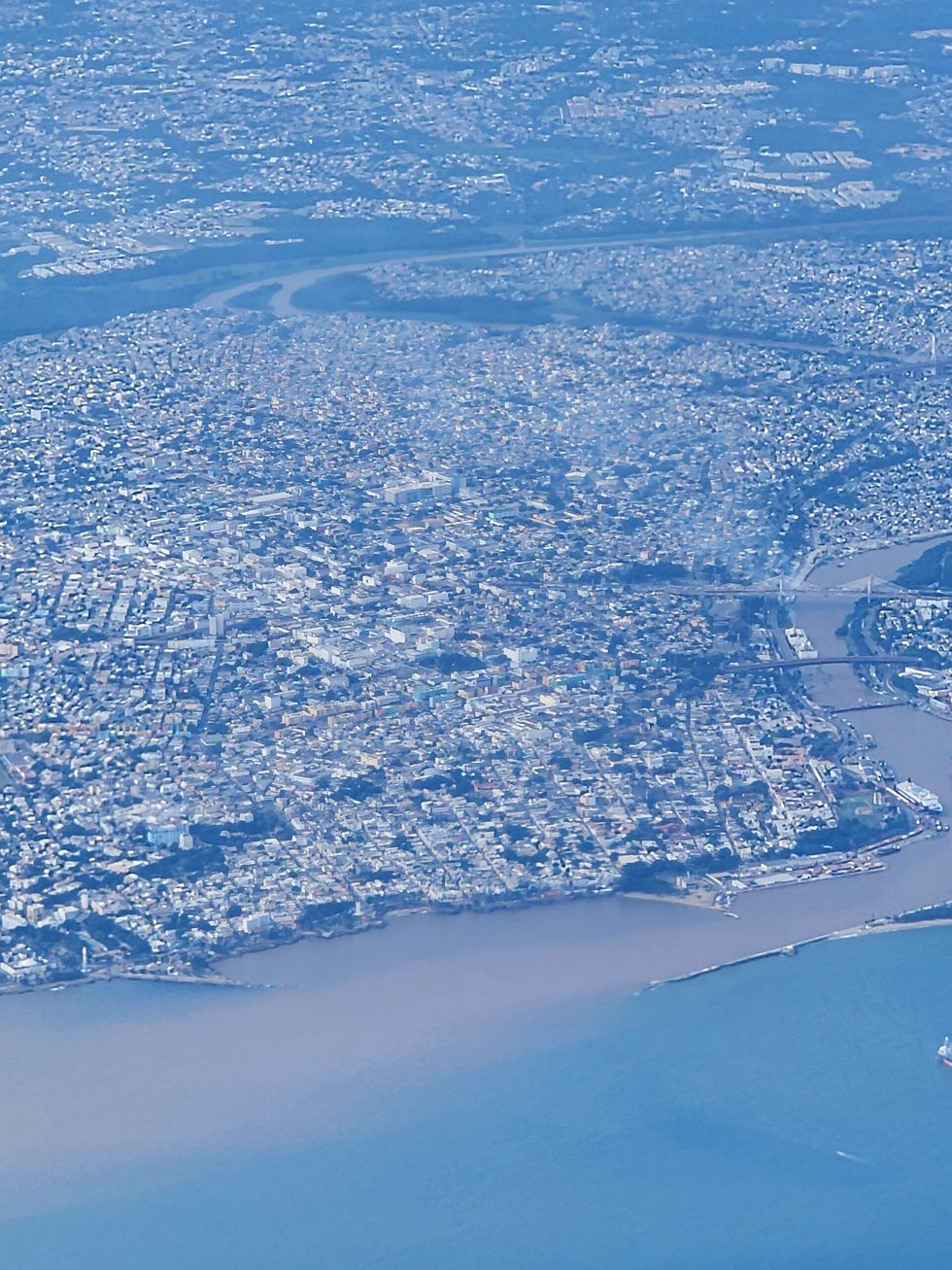
Aerial view, Zona Colonial, Santo Domingo
Getting to Santo Domingo
Based on my experience, prior to going to Santo Domingo, I recommend knowing some Spanish or going with someone who can speak the language. If you are learning Spanish, or polishing your skills, this is a great immersive experience to really level up your language abilities. Knowing some Spanish can make everyday interactions easier. During my visit, I found many of the people I encountered welcoming and happy to engage in conversation.
Getting to Santo Domingo from Miami, Florida is a short and scenic flight with lots to see out of the window if you happen to get a window seat. Santo Domingo has an airport called, Aeropuerto Internacional Las Américas and it is about 29 km east of the Zona Colonial.
At the time of my visit in 2024, the best way to get to and from the airport was by taxi as Ubers were not allowed near the airport. It is best to arrange for a taxi to meet you at the airport ahead of time through the hotel you are staying at, but there is a taxi stand at the entrance of the airport as well. Always verify that the taxi or transport is official. Note that transportation options and rideshare pickup procedures at the airport can change, so check current airport and accommodation guidance before your trip.
If your hotel is sending someone to pick you up, it is best to be able to communicate with that person directly through WhatsApp or phone so that you can easily find where they are parked waiting for you at the airport. During my visit, the area outside of the airport had a lot of people and traffic, and I found it daunting trying to find where the taxista was parked.
During my visit, U.S. dollars were accepted for my taxi fare, although payment practices can vary. Consider confirming the accepted payment method and fare before beginning your ride. You can exchange U.S. Dollars for pesos dominicanos at the airport. On my visit, the ride from the airport to Zona Colonial was about 30 minutes and I paid approximately $40 each way, but fares can change, so confirm the current price before traveling.
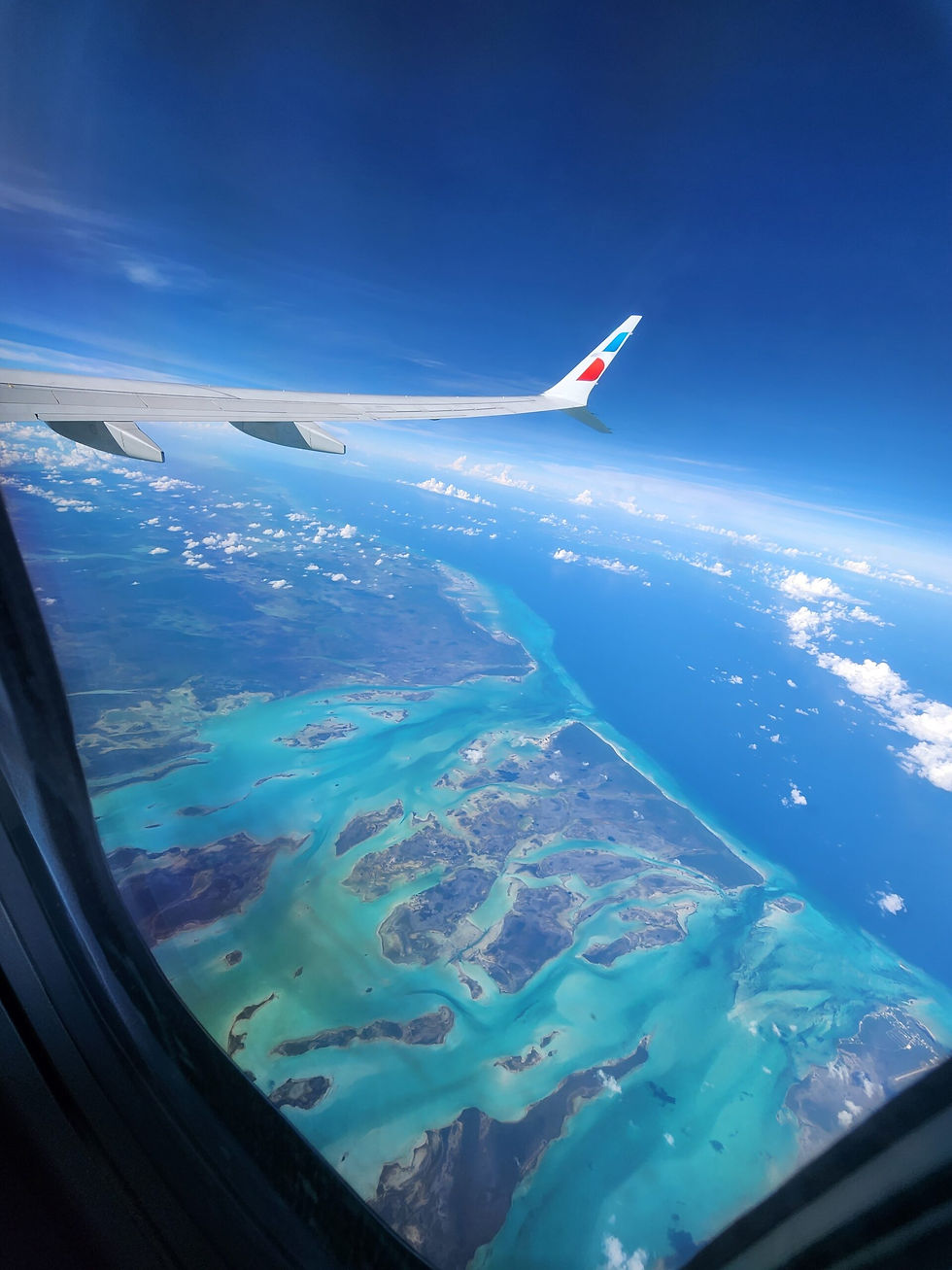
If you happen to fly from Miami to Santo Domingo, get a window seat and fly during the day. The water is beautiful all of the way there and you can get some amazing aerial photographs of many of the islands.
Aerial View, Mangrove Cay, Bahamas, on the return portion of the flight. (as identified by Google Maps as I was flying over)
Hotels in Zona Colonial
There are many hotels in Zona Colonial within walking distance of attractions and restaurants. During my visit, I stayed at Gran Hotel Europa. It has a beautiful rooftop terrace that overlooks the river, the city and with views of Faro a Colón in the distance. You can easily book hotels in Zona Colonial on apps such as Expedia. One thing to note from my experience: my hotel did not have hot water during my stay and did not provide washcloths. If you prefer to use washcloths when showering, you may want to pack your own.
Rooftop terrace, Gran Hotel Europa

Sites and Points of Interest in Zona Colonial
Zona Colonial is a true walker’s paradise. There are so many sites to see around the historic area that one can easily have a full itinerary every day. As of 2024 there was a large-scale restoration project in Zona Colonial, so access to some locations was limited. Check current opening information before visiting individual sites. The Dominican Republic's official tourism website is a useful resource for exploring attractions and planning your visit.
Prior to traveling, I find it useful to save each location I would like to visit in Google Maps. A strategy I follow is to group saved locations that are near each other and visit them on the same day. That way, I can see more places without spending as much time going back and forth across the city.
Some of many key points of interest in Zona Colonial are:
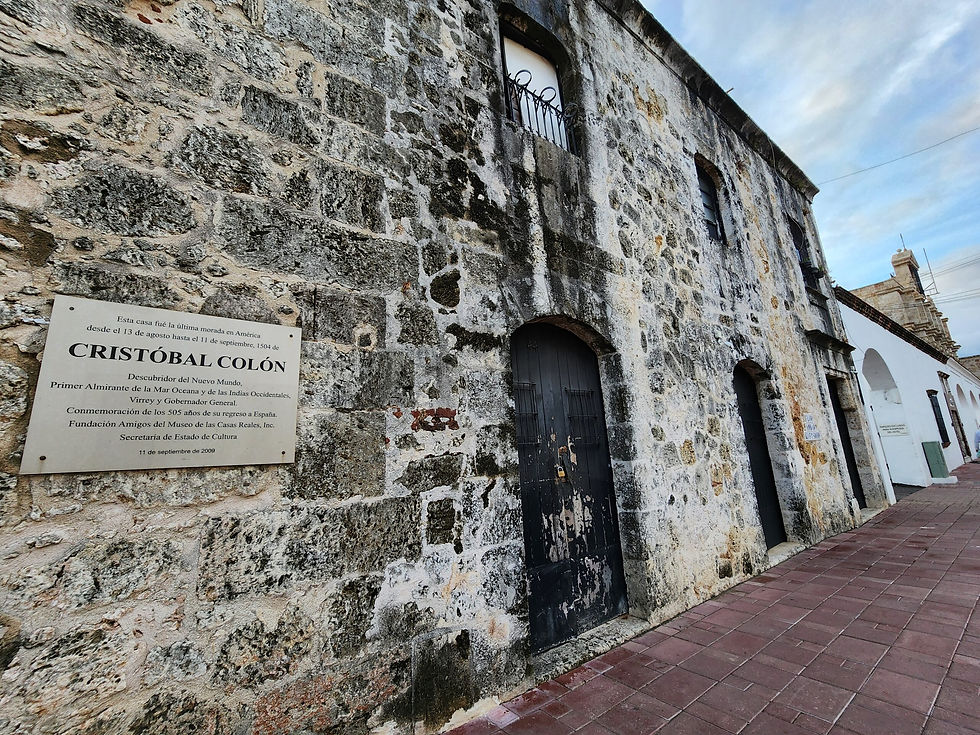
Nuestra Señora de la Encarnación, Museo de la Catedral, Alcázar de Colón, A site identified locally as Christopher Columbus's last house (Última Residencia de Cristóbal Colón), Fortaleza Ozama.
Christopher Columbus's last house (Última Residencia de Cristóbal Colón), as identified during my visit.
Items to Note for Zona Colonial
Unsolicited Tours: I encountered individuals randomly approaching and starting to explain, unsolicited, the history of a building that I was in, or pointing out sites to me. These individuals then expected a tip for them having told me about the city, even though I did not solicit this information from them. I had thought they were employees of the city, but it turns out in my case they were not. When I refused to give a tip, the individual did become somewhat rude. If you're unsure whether someone works for an attraction, it's reasonable to ask before accepting assistance or just simply politely refuse.
Unsolicited Sales Offers: I did have several individuals approach me trying to sell several different things such as tours and crafts. I politely refused and went on my way.
Safety: As a woman, I felt comfortable exploring the central areas of Zona Colonial during my visit. I observed the area to be very clean, with a large variety of bars, restaurants, and historical sites to visit.
Tips: Restaurant bills generally include an 18% ITBIS tax on taxable food and services and a 10% mandatory service charge known as the propina legal. Check your bill before deciding whether you'd like to leave an additional voluntary tip.
Helpful Resources